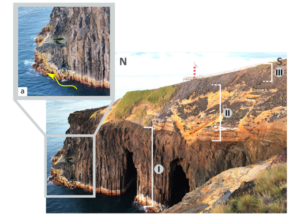
Natural disasters are rather unpredictable and can interrupt human life, cause economic damage and even take lives. Even though they are mostly unpredictable, there are methods for assessing the risks of natural disasters, one of which is the Fine-Kinney, which was originally used for assessing industrial accident risks. Even though the method has been applied […]
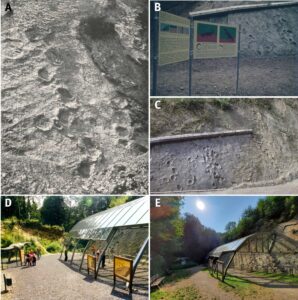
The low level of the Jurassic sea in the area of Bad Essen-Barkhausen (Wiehen Mountains, NW Germany) was a precondition for the migration of a herd of sauropods and theropods through this coastal area about 153 million years ago. The dinosaurs left at least 11 trackways on a single fine-grained siltstone layer and several more […]
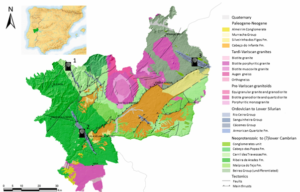
Naturtejo UNESCO Global Geopark (Portugal) area includes deposits from the Neoproterozoic to the Quaternary. Despite its limited exposure area in major Variscan folded structures, the Ordovician series hosts some of its most famous geological heritage features, such as the Penha Garcia Ichnological Park. The Upper Ordovician of the Central Iberian Zone is still far from […]
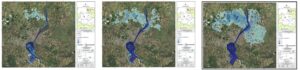
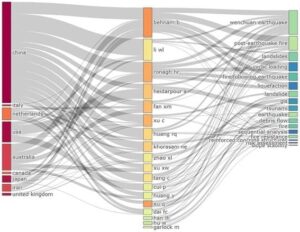
Earthquakes are disasters that occur because of tectonic movements under the ground, causing great damage and loss of life. Post-earthquake fires, tsunamis, floods, avalanches, landslides, soil liquefaction, and volcanic eruptions also have devastating effects. Here, we investigate basic analysis methods and specialized methods used for these disasters in academic studies. The study aims to determine […]
For many years, even before it was designated as Las Loras UNESCO Global Geopark, work was carried out to promote and protect the geological heritage of the territory. To this end, an innovative model of governance was introduced, involving local people in the management of heritage by means of citizen participation processes and Geo-volunteering. This […]

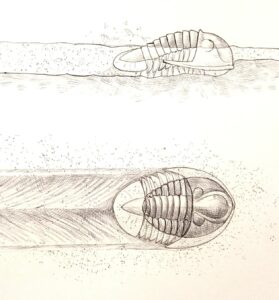
Cruziana is a common and widespread trace fossil in Lower Palaeozoic strata that is generally attributed to the activity of trilobites. The Lower to Middle Ordovician Armorican Quartzite Formation of southern Europe contains well-preserved examples of the Cruziana rugosa Group. This paper outlines how Cruziana forms an important part of the geological heritage in the […]
Mandro in Sahibganj District of Jharkhand State, India is known for its abundance of petrified wood and floral impressions from the Rajmahal Traps of Albian–Aptian age. This locality is among the 34 Geological Heritage Sites identified by the Geological Survey of India. The scientific importance of the site is vested in the intricate preservation of […]
The Ammonitico Rosso is one of the most studied as well as most unusual facies developed in the Tethys Ocean, mainly during the Jurassic. This calcareous to marly-calcareous facies was typical on high seabeds seawards from the main platforms and emerged lands, sites where fine sediments accumulated discontinuously, while invertebrate animals tunneled the sea bottom […]

The giant Ordovician trilobites from the Canelas quarry constitute the most iconic sign of identity of the Arouca UNESCO Global Geopark at an international level. Palaeontological studies determined the importance of this fossil locality for studying aspects of the social behavior of these marine arthropods and their interactions with other represented invertebrate fossil groups. Although […]

In a recent review article, Lima & Meneses (2023, Geoconservation Research, 6 (1): 114–127) reported on the Azores Geopark, introducing a new geosite for São Miguel Island. We here express our concerns regarding the data presented in this review article. In our commentary, we focus mainly on the use of older bibliographic sources and inaccurate […]