The Isle of Wight has a rich and varied geological heritage which attracts scientists, tourists and fossil collectors, both private and commercial. Each party has a role to play in geoconservation and geotourism, but a policy on the long term curation of scientifically important specimens is essential to prevent future conflicts. A new code of […]
Colombia boasts extensive geodiversity thanks to complex geological processes that have shaped its landscape over geological time. The eastern region of the country is characterized by ancient rock formations, covered by a substantial layer of sediments, influenced by tectonic and erosive forces. These forces have given rise to unique geoforms that qualify as geosites. Thirteen […]

The Nusplingen Plattenkalk is a Solnhofen-type fossil Konservat-Lagerstaette in the southwestern part of the Swabian Alb, which is scientifically exploited by the Stuttgart Natural History Museum. The Nusplingen Plattenkalk formed in a deep lagoon surrounded by islands. The highly diverse and exceptionally preserved fossil fauna and flora allow a reconstruction of the Late Jurassic marine […]

Penha Garcia Ichnological Park is the most important fossil site and one of the most significant geosites of international relevance, in the territory of Naturtejo UNESCO Global Geopark. This municipal protected area is a key site for the study of trace fossil diversity at high paleolatitudes in the early stages of the Great Ordovician Biodiversification […]
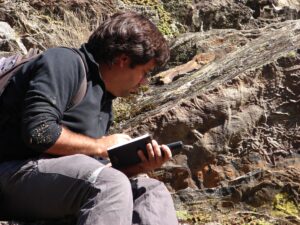
Paraguay’s first geopark began in 2017 and work is ongoing. The project is managed by a committee comprised of key stakeholders from state and municipal entities, universities, and local communities, to promote and generate sustainable local development strategies. Paraguay has significant geodiversity, particularly in the eastern region, with rocks ranging from the Paleoproterozoic to Quaternary […]

The Global Boundary Stratotype Section and Point (GSSP) of the Aalenian Stage (base of the Middle Jurassic), was established in Fuentelsaz (Central Spain) by the International Commission on Stratigraphy (ICS) of the International Union of Geological Sciences (IUGS) in 2000. This stratotype is one of the most important geosites of the Molina-Alto Tajo UNESCO Global […]

The Early Paleozoic oceans were generally characterized by short trophic chains and simple ecological tiering dominated by suspension-feeding organisms. However, the Great Ordovician Biodiversification Event (GOBE) was responsible for the complexification of food webs, increasing depth and diversity of substrate ecospace utilization and increasing benthic competition for resources near the water-substrate interface. Daedalus is an […]
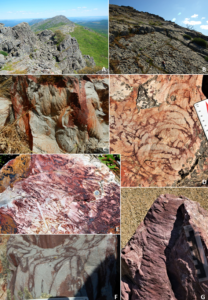
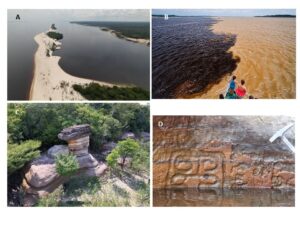
Nature is an essential public resource that provides food, clean water, energy resources, minerals and shelter for human life. To face environmental changes and the exploitation of natural resources, it is crucial to understand and manage the ecosystem services (ES) that benefit humanity and preserve the natural processes that create them. In the Amazon region, […]
Located in France on the eastern edge of the Massif Central, the Parc naturel regional des Monts d’Ardèche, inscribed as a UNESCO Global Geopark in 2014, presents great geological diversity. This includes a sedimentary boundary between the Jurassic and Cretaceous, represented by limestone and marl. Fossils of crocodilians have been discovered in these layers, highlighting […]

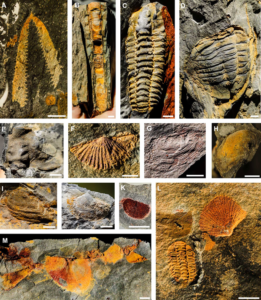
Middle Ordovician successions occur at Naturtejo UNESCO Global Geopark in five Variscan-folded, kilometer- to tens of kilometer-long structures. Four of them revealed to be fossiliferous in the different recognized lithostratigraphic units, middle-to-uppermost Darriwilian in age, with particular emphasis for Brejo Fundeiro (Oretanian regional chronostratigraphic stage) and Fonte da Horta (Dobrotivian regional stage) formations. Recent paleontological […]